The run where the code was right and the camera was inside the light source
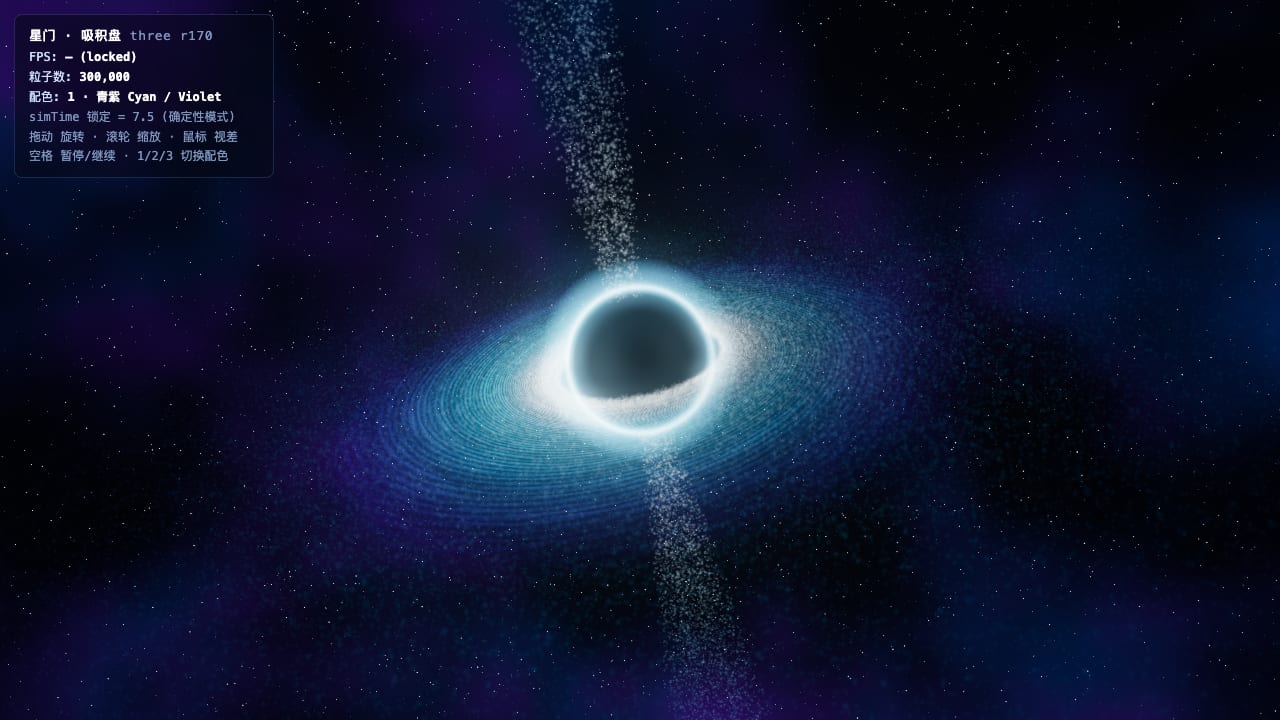
Same prompt, GPT-5.6 Terra, one shot: 759 lines, a million particles, zero errors, and every HUD and ?t= hook implemented. But the camera and the scene scale were never reconciled, so the frame is one enormous white arc. Nothing an assertion can check failed. It is still a failure.
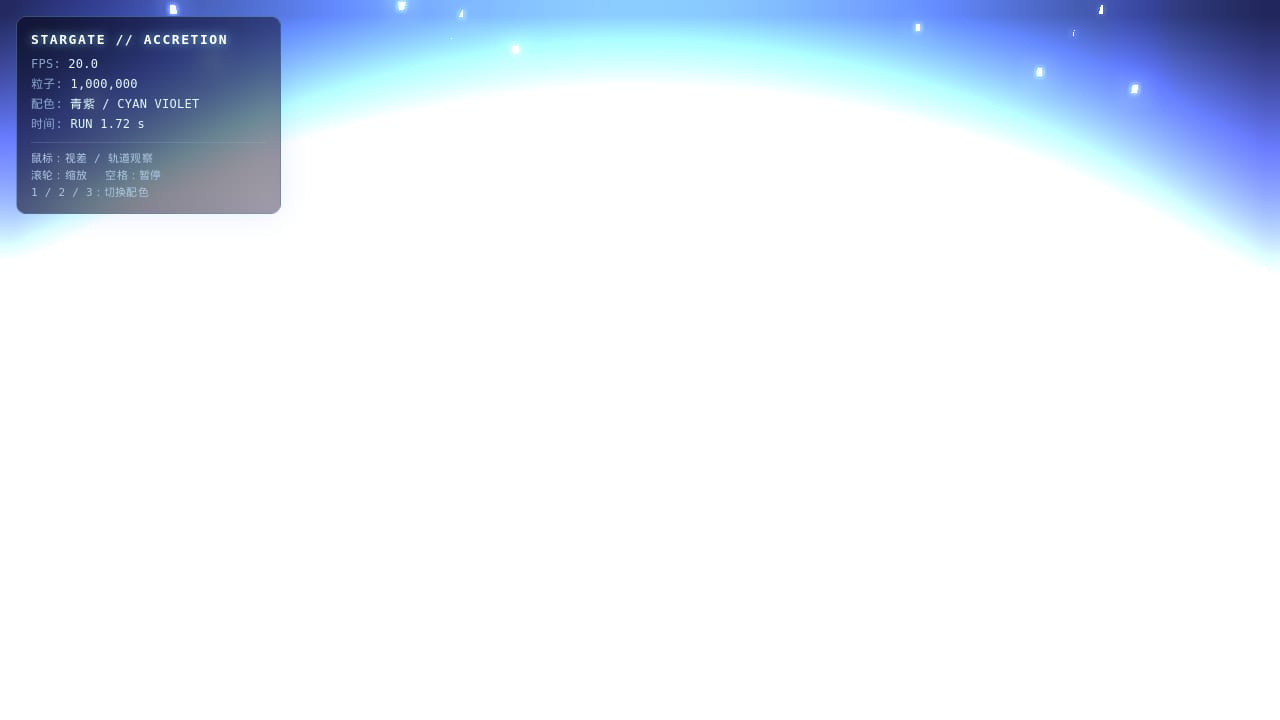
The on-screen labels are in Chinese: this is the model's verbatim output from an experiment run in Chinese, and editing it would make the artifact something other than what was measured.
How it was made
- Model
- GPT-5.6 Terra
- us.openai.gpt-5.6-terra
- How
- one shot
- Reasoning effort
- high
- Output tokens
- 12.2k
- Wall time
- 2m 5s
- Artifact
- 759 lines, one file
- Error feedback
- none
This one is published on its own because it is the cleanest example of a failure that static metrics cannot see.
On reasoning, code, tool calling and vision benchmarks the three models are close to
even. This run also genuinely works: __DEMO_READY is true, page and console errors
are both zero, the HUD reports 20.0 FPS, 1,000,000 particles and the cyan-violet
palette, and the ?t= determinism contract holds. Every hook that can be asserted
automatically was implemented.
But the camera position and the scene scale were never reconciled, which puts the camera inside the glowing body: the frame is one enormous white arc edge, with no black hole, no disk and no dust to speak of. Not one automated check fails. Only a person looking at it can tell it is wasted.
Two other numbers are far apart as well: 12.3 seconds to initialise against 537 milliseconds for the Astra run, and 3.43 FPS against 8.66 under software rendering.
Controls: drag to orbit, scroll to zoom, space to pause, 1/2/3 for palettes,
?t=7.5 to freeze the clock.
Same prompt, other runs
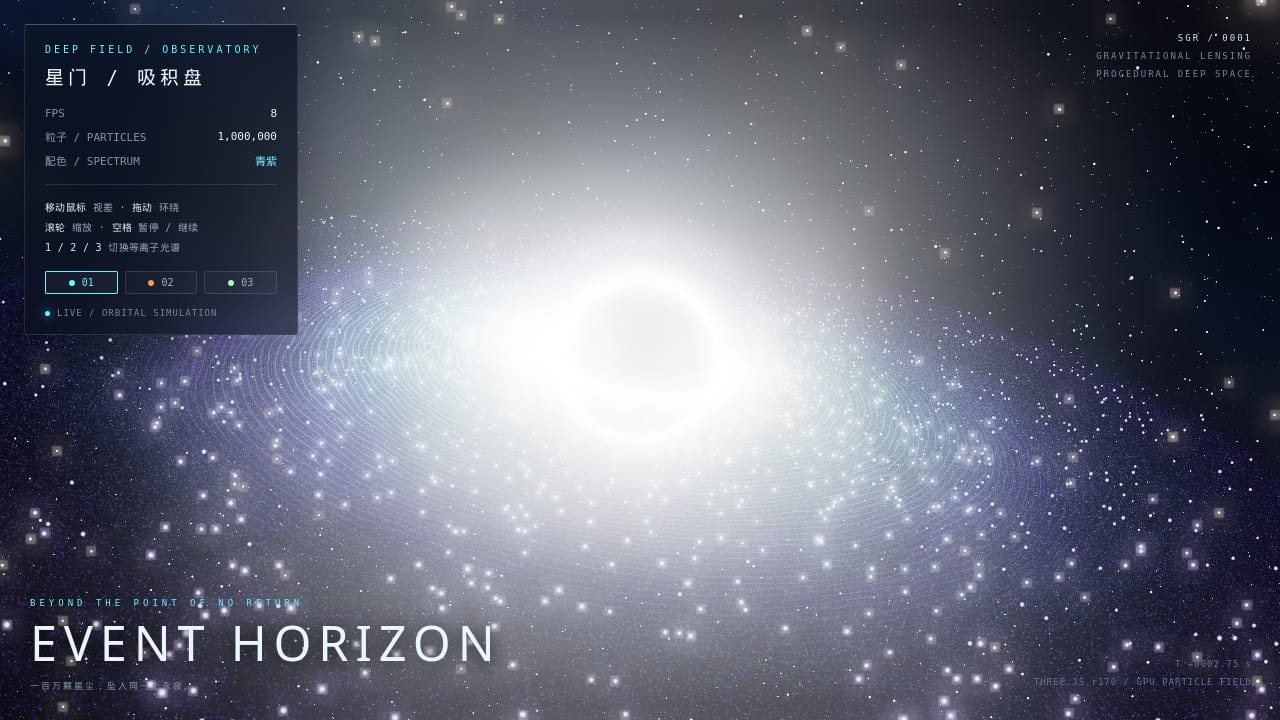
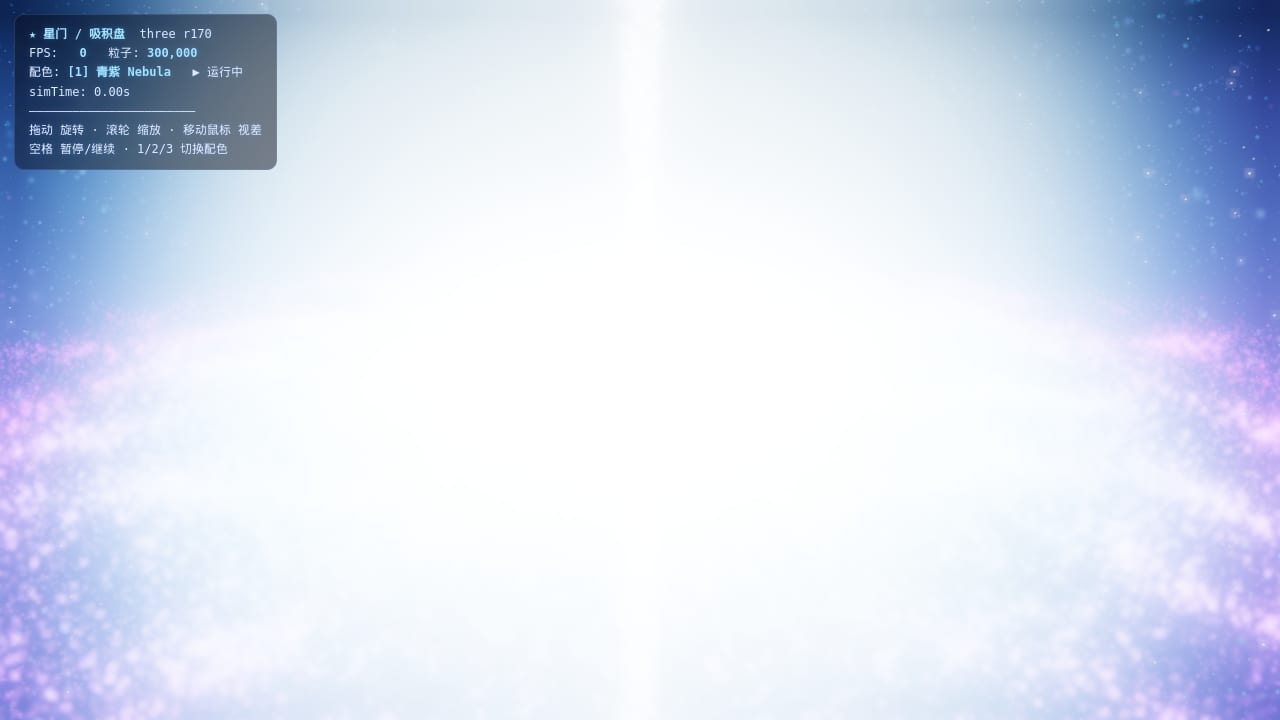
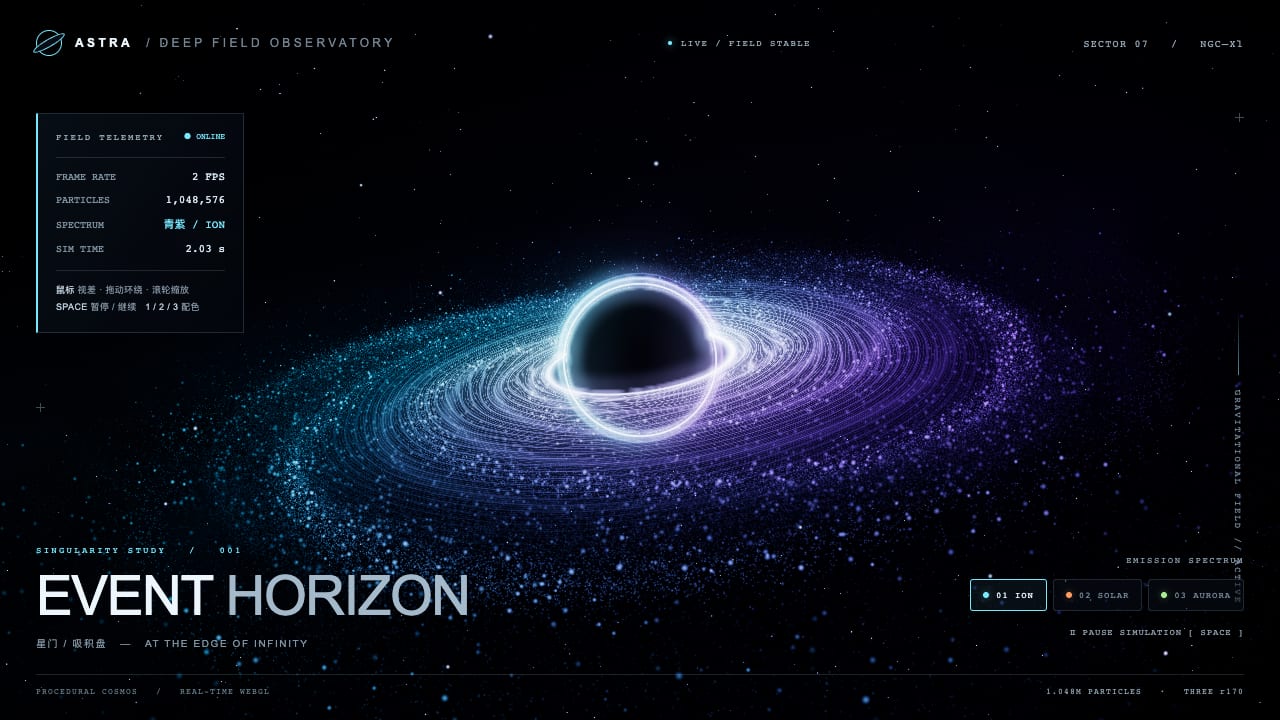
three.js r170 is served from this site, so running a demo makes no third-party request. Published by the author as an individual; testing was self-funded and nothing here represents an employer's position.